Multimeter Uses: Essential Functions Explained
The average multimeter can measure up to 20V in voltage levels. Yet many projects, especially in innovation and electronics, use less than 200mA of current. This contrast highlights how important multimeters are for electrical testing and troubleshooting tasks. Knowing how to use a cen tech digital multimeter price is vital, not just for technicians and engineers, but also for students exploring electrical concepts.
Multimeters are indispensable in their versatility, offering accurate measurements of voltage, current, and resistance. Here, we’ll explore the various ways a multimeter can be used. By the end, you should have the knowledge needed to use this important tool effectively in your electrical work.
Key Takeaways
- Multimeters are essential tools used to measure voltage, current, and resistance.
- Grasping multimeter uses is important for accurate electrical troubleshooting.
- Digital multimeters are popular for their clarity and precision in readings.
- Safety precautions are essential when using a multimeter for electrical testing.
- Continuity testing is an important feature for checking electrical connections.
- Picking an appropriate multimeter can strongly influence the speed and accuracy of your tests.
Introduction To Using Multimeters
A multimeter is an essential tool for diagnosing electrical issues and confirming that devices operate properly. By measuring different electrical quantities, it serves both experienced technicians and DIY enthusiasts.
What Is A Multimeter Exactly?
A multimeter is a combined instrument designed to measure voltage, current, and resistance. This aids significantly in solving electrical issues. You can get multimeters in analog or digital versions, and each type has its place. Analog models use a needle and scale for measurement, whereas digital ones show values on a display. They test wall outlets, batteries, and other electronics.
In electrical testing, the role of a multimeter is paramount. It checks circuit integrity and identifies issues in various environments. In the automotive sector, it is commonly used to measure battery voltages and sensor outputs. It also helps keep industrial machinery running correctly, reducing the risk of costly breakdowns.
Multimeters are vital test tools that measure AC and DC voltage, current, and resistance. Their flexibility across many tasks makes them extremely useful for everything from basic repairs to advanced projects.
Types of Multimeters
Understanding the various types of multimeters is crucial for successful electrical testing. They are usually divided into two categories: analog multimeters and digital multimeters. Both come with unique strengths and useful traits. So, choosing the best type depends on your needs and personal preferences.
Understanding Analog Multimeters
These multimeters are analog devices with a pointer that sweeps over a scale. They work very well for watching quick changes in readings. Their design lets users see changes as they happen. Analog devices boast a sensitivity range typically between 1,000 to 50,000 ohms per volt, with the peak sensitivity reaching up to 20,000 Ω/V. Because of this, they were widely used by radio technicians during the mid-20th century.
About Digital Multimeters
Digital multimeters are very popular thanks to their high precision and extensive features. They use LCD displays that provide clear numeric readings, often with up to four digits. They are capable of measuring different parameters such as voltage, resistance, and temperature. Advanced models also include features like auto-ranging, data logging, and wireless connectivity. This makes them perfect for complex jobs in fields like automotive diagnostics and renewable energy.
Comparing Analog And Digital Multimeters
Deciding whether to buy an analog or digital multimeter comes down to what you need and how much you want to spend. The table below outlines their key differences:
| Feature | Analog Type | Digital Type |
|---|---|---|
| Display | Moving needle on a dial | Numeric display (LCD) |
| Accuracy | Good, but less precise | High precision and resolution |
| Response Time | Responds quickly to changing values | Response speed depends on sampling rate |
| Typical Uses | Best for rapidly changing values | Very versatile and used in many industries |
| Price Range | Generally lower | Varies widely, but can be higher |
Both types are valuable for electrical testing, but digital multimeters have become more popular thanks to their precision and capabilities among hobbyists and professionals.
Understanding Multimeter Components
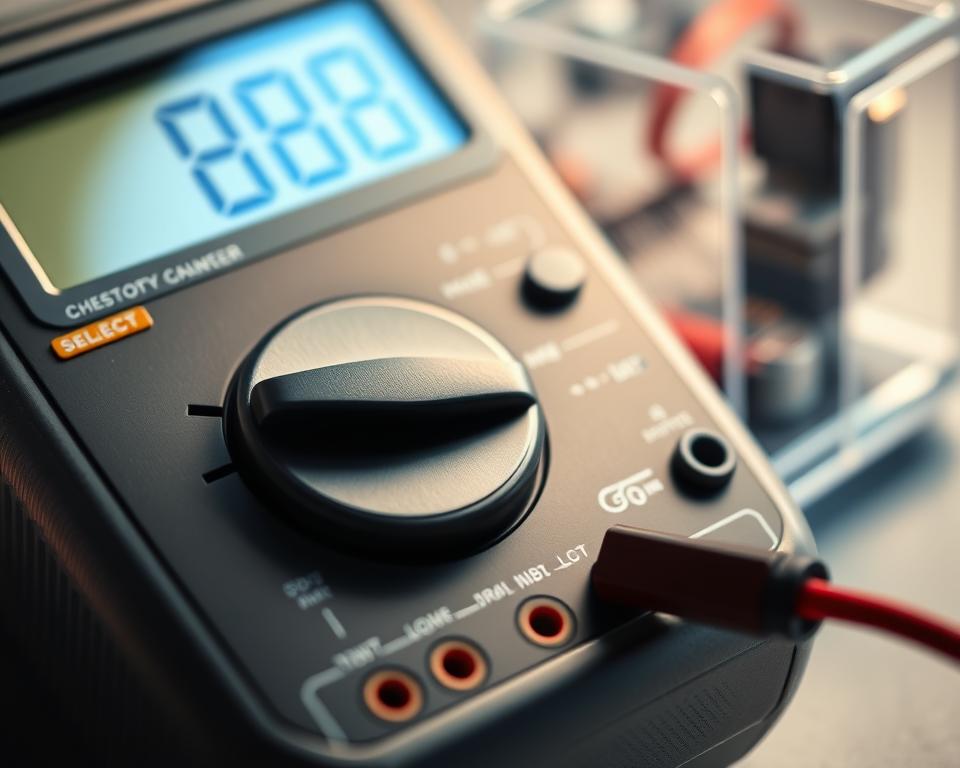
Knowing the key components of a multimeter helps you operate it correctly and confidently. It comprises several main components, each with a distinct role. The display shows the measurement values, and the selection knob allows you to switch between voltage, current, and resistance modes. Probes connect the device to the circuit being tested, marking another crucial feature.
Essential Parts And How They Work
You can break the important parts of a multimeter into these sections:
- Display Panel – Displays readings immediately so you can quickly understand the measured values.
- Selection Knob – Enables the user to switch between different measurement functions like voltage, current, and resistance.
- Ports: Typically three ports, though some models include four, for attaching different probes.
- Test Probes: Essential leads that connect the multimeter to the circuit, usually with a red positive lead and a black ground lead.
How Multimeter Probes Work
Probes are a fundamental part of how a multimeter works. They are available in different types, such as standard or alligator clips. The red probe is used for testing voltage or resistance; the black acts as a ground. Alligator clips make it easier to hold connections on multiple components, which can improve both accuracy and convenience.
How the Selection Knob Works
The selection knob is key for maneuvering through the device’s features. Turning the knob lets you swap between AC/DC voltage ranges, current ranges, and resistance settings. Selecting the correct setting is essential to obtain accurate readings. You should be careful when picking ranges so you do not harm the device or get misleading readings.
For anyone involved in electrical testing, knowing the multimeter’s functions is crucial. They offer critical readings that allow accurate assessment of electrical parts. By measuring voltage, current, and resistance, they become indispensable for both professional applications and home projects.
How To Measure AC And DC Voltage
Measuring both AC and DC voltage is a primary function of multimeters. They offer high precision, with the capability to detect slight changes. This precision is important for making sure electrical equipment runs safely within its rated voltage range.
How To Measure Current With A Multimeter
Measuring the flow of current in both AC and DC circuits is another important function of multimeters. This ensures components function safely and efficiently, which is crucial for tasks like automotive diagnostics and industrial maintenance.
Understanding Resistance Measurement
To check the condition of components such as resistors, you use the resistance measurement feature. With measurement ranges extending into megaohms, multimeters are ideal for evaluating circuit integrity and running continuity tests.
Using Continuity Testing
For troubleshooting electrical paths, continuity testing is extremely important. The meter uses beeping sounds or visual indicators to show whether a connection is present. This feature helps you verify that circuits are functioning as intended, speeding up troubleshooting.
| Key Function | What It Does | Common Application |
|---|---|---|
| Voltage Measurement | Measures AC and DC voltage with high accuracy. | Assessing the performance of power supplies in various devices. |
| Current Measurement | Measures how much current is flowing through a circuit. | Verifying battery performance and sensor operation in systems. |
| Measuring Resistance | Tests the functionality of circuit components. | Ensuring resistors and diodes are within tolerance levels. |
| Testing Continuity | Checks for electrical connections. | Troubleshooting circuit integrity. |
Safe And Effective Multimeter Use
Anyone working with electrical systems must understand how to use a multimeter. Proper procedures ensure safety and measurement accuracy. When measuring voltage, current, or resistance, each step requires certain precautions.
Essential Safety Precautions
Learning safety precautions before using a multimeter is critical. You must ensure your multimeter has the correct safety rating for the environment in which you are working. Statistics suggest that over 30% of electricians rely on under-rated tools, which is dangerous. To operate safely, always ensure the multimeter is set correctly before attaching probes.
You should never touch live conductors, especially when checking current, as this can cause shock. Wearing suitable personal protective equipment (PPE) is a must for circuits over 50 volts.
How To Measure Voltage Step By Step
Being precise and careful is important when measuring voltage. Begin by setting the multimeter to the correct voltage type and range, whether AC or DC. Then, plug the probes into the common port and the voltage measurement port. After that, connect the probes carefully across the points you want to test.
If you read 0 volts when measuring between ground and neutral, it may signal a wiring issue, which underlines the importance of multimeter safety.
How To Measure Current Step By Step
Measuring current is a bit more complex than measuring voltage. You must interrupt the circuit flow where you want to measure, as the multimeter joins the circuit in series. Set the meter to a suitable current range, based on whether you expect amperes or milliamperes. Then connect the probes firmly between the two open ends of the circuit.
Always watch the display for warning icons or high readings, especially when values exceed 30 volts.
Step-By-Step Resistance Testing
If you want a precise resistance reading, remove the component from the rest of the circuit. Set the multimeter to its resistance (ohms) setting and attach the probes across the component. A matching reading means the component works well; otherwise, it might be defective. Taking these steps helps protect the meter and ensures that you analyze the electrical behavior correctly.
Common Applications of Multimeters
Multimeters are indispensable in both professional and home settings for a range of tasks. They excel at troubleshooting electrical circuits, which makes them extremely valuable. They play a key role in finding and fixing electrical issues so that systems operate correctly.
Troubleshooting Electrical Problems With A Multimeter
Multimeters primarily help in diagnosing electrical circuit issues. Professionals and hobbyists alike use them to identify where a fault is occurring. By measuring voltage, current, and resistance, they identify faulty parts, ensuring safe and efficient operation.
Testing Batteries and Power Sources
Multimeters are frequently used for checking the condition of batteries. They measure the battery’s voltage level to determine charge state in automotive or household applications. It enables you to see whether a battery is usable or should be replaced, supporting smarter energy use.
Checking The Integrity Of A Circuit
Checking circuit integrity is essential for both safety and performance. They check integrity using resistance readings and continuity testing. They detect issues like broken wires or defects, prompting timely fixes. In general, using a multimeter increases safety and simplifies the troubleshooting process.
Choosing the Right Multimeter for Your Needs
Choosing the right multimeter boosts your efficiency in electrical testing. You should consider accuracy, measurement ranges, portability, and how user-friendly the meter is. Unlike analog meters, digital multimeters excel in functionality, favored by technicians and hobbyists.
Key Factors To Consider
Essential factors in selecting a multimeter include:
- Accuracy: Digital multimeters provide high precision, detecting changes down to 1 millivolt.
- Measurement Ranges – Opt for models that handle various electrical metrics like voltage, current, and resistance.
- Portability: Pick a compact and lightweight model if you plan to use it in the field.
- Usability: Auto-ranging and backlit displays make for a better user experience.
Example Model: Cen-Tech 7 Function Digital Multimeter
The Cen-Tech 7 Function Digital Multimeter is popular because it is versatile and budget-friendly. It offers important functions that suit both new users and seasoned technicians. It also provides auto-ranging, which simplifies taking measurements and speeds up your work.
This model’s count capacity hits up to 20,000, promising precise readings for a variety of electrical jobs. You can use it effectively for fault finding, automotive testing, and checking batteries. Because it combines useful features with simple operation, the Cen-Tech 7 Function Digital Multimeter is a strong choice when you are investing in a meter.
Wrapping Up
Understanding how a multimeter works is crucial for anyone performing electrical tasks. We’ve summarized the main roles of multimeters, stressing their importance for testing and safety. Their precision in measuring voltage, current, and resistance is invaluable. As a result, multimeters are vital for experienced technicians and enthusiastic DIY users alike.
These tools do more than simply show readings. They provide advanced functionalities like data logging and wireless connections. With these features, you can use multimeters in many areas, including vehicle diagnostics and renewable energy systems. Their continuity and frequency test options also help pinpoint defects, making sure systems operate smoothly.
Armed with this insight, individuals can adeptly use their multimeter proficiency for precise troubleshooting and enhancing safety measures. You can also improve the efficiency of electrical installations and maintenance work. In essence, the adaptability of multimeters makes them irreplaceable when aiming for careful, detailed electrical work.
Frequently Asked Questions
Which Functions Does A Multimeter Primarily Provide?
The main functions of a multimeter are measuring voltage (both AC and DC), current, and resistance. It also performs continuity tests. Together, these functions are crucial for diagnosing problems and assessing overall circuit condition.
How do I choose between an analog and a digital multimeter?
Deciding between analog and digital options comes down to your specific requirements. Analog types are great for showing swift changes in value. In contrast, digital models provide precise numeric readings. Because of this, many people choose digital meters for their day-to-day work.
What safety precautions should I take when using a multimeter?
When you use a multimeter, always choose the correct setting before you connect the probes. Avoid direct contact with live wires while measuring current. Also, disconnect parts before resistance tests to avoid inaccurate readings.
Is It Possible To Test Batteries With A Multimeter?
Yes, testing batteries is one of the most common uses for a multimeter. By reading the battery’s voltage, they reveal how much charge is left. That way, you can make sure your batteries are dependable for whatever you are powering.
What is continuity testing, and why is it important?
Continuity testing checks electrical connections in a circuit with a multimeter. It’s crucial for finding and fixing breaks. This process helps keep your electrical setups functioning as intended.
What are the typical components found in a multimeter?
A multimeter typically includes a reading display, a function selector knob, probe ports, and the probes. These probes are used to connect the meter to the points in the circuit you want to measure.
How does the Cen-Tech 7 Function Digital Multimeter compare to other models?
The Cen-Tech 7 Function Digital Multimeter is user-friendly and offers a variety of functions, such as auto-ranging. Its affordable price makes it an attractive choice for both professionals and hobby users.