Managing a restaurant in Pomona means handling a long list of daily duties. One of the most important, yet commonly overlooked, jobs is controlling the fats, oils, and grease (FOG) flowing from your kitchen. Neglecting this duty can lead to serious problems. That’s where a trusted local partner makes all the difference.
Go to website of Grease Cleaning Pros in Pomona

Continue reading about Grease Cleaning Pros in Santa Barbara

Continue reading about Grease Cleaning Pros in Torrance
Grease Cleaning Pros is the local specialist you can rely on for this critical service. We know that regular grease interceptor maintenance is more than just another task on your list. This is a crucial investment in both your business and the community around you.
Without proper maintenance, a clogged system can trigger major issues. These include unpleasant backups, costly health code violations, and significant fines. In more serious situations, it can even force a temporary shutdown of your operation. These are risks no food service business can afford.
Our team is the dependable, friendly solution trusted by kitchens across Pomona. We focus on complete compliance and your peace of mind. With strong local knowledge, we help ensure your operations run smoothly and safely.
We have designed our service to be fully hassle-free. Our experts work around your schedule and create as little disruption as possible. Ready to learn how proper FOG management protects your business? Review our complete service offerings below.
Key Takeaways
- Regular grease interceptor maintenance is a crucial investment for any food service business.
- Ignoring maintenance can cause health code issues, expensive fines, and possible shutdowns.
- A trusted local service provider ensures compliance and reduces risk.
- Professional service should be convenient and designed around a busy kitchen’s hours.
- Effective FOG management is necessary for your restaurant to operate safely and smoothly.
- Choosing an expert team provides peace of mind and protects your business’s reputation.
- Preventive care is always more cost-effective than emergency repairs or regulatory penalties.
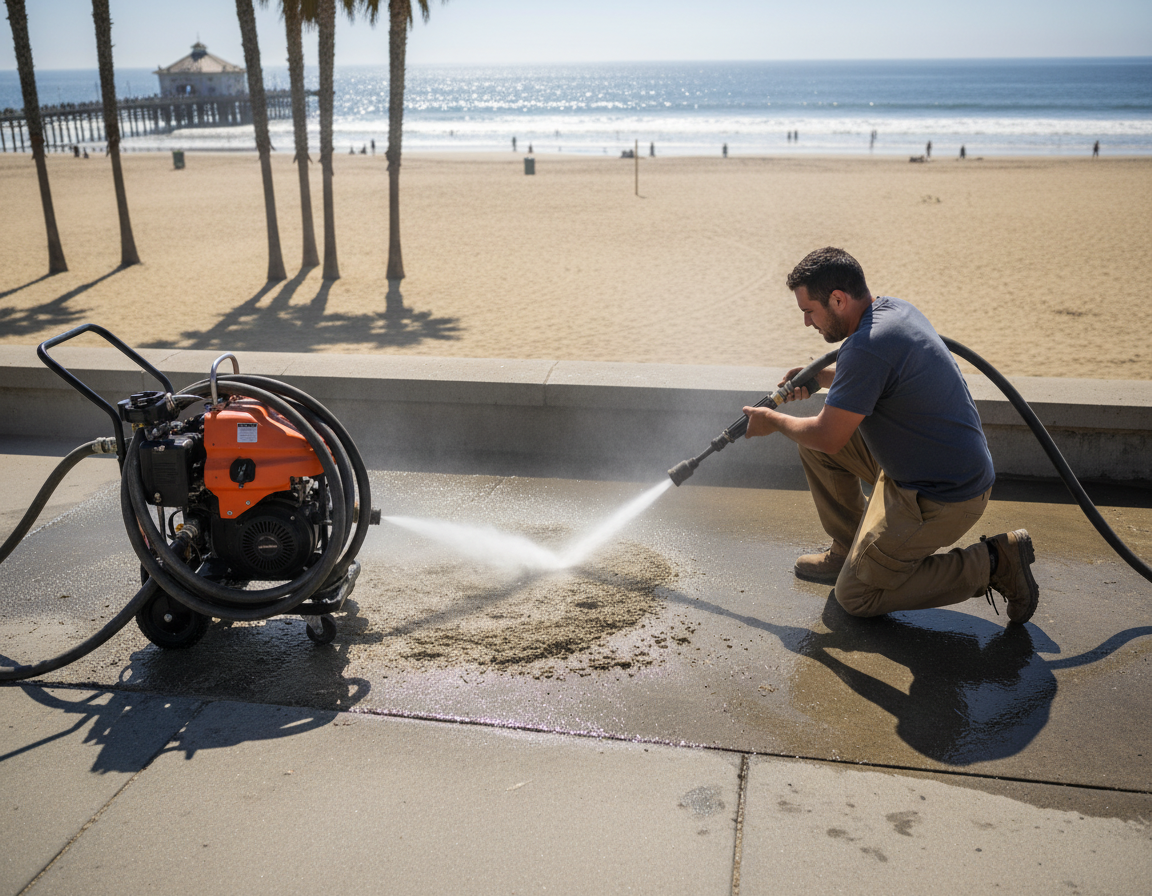
Welcome To Grease Cleaning Pros In Pomona, Your Local Expert
Every successful food service operation in our city relies on a hidden hero: a well-maintained FOG management system. We are your local team, committed to keeping that system working perfectly.
Our mission is straightforward. We deliver top-tier, reliable service that safeguards your business and our shared sewer infrastructure. Consider us your first line of defense against costly backups and code violations.
Our technicians are certified and deeply experienced. They know local health code requirements inside and out. Most importantly, they understand how demanding and fast-moving a commercial kitchen can be.
We founded our company around a customer-first philosophy. You can always expect flexible scheduling, transparent pricing, and clear communication. Our goal is to make this essential maintenance *truly* hassle-free.
We use professional-grade equipment on every job. Every bit of waste is handled through environmentally responsible disposal practices. You can trust that we care for our community as much as your kitchen.
We know downtime is lost revenue. We make minimal disruption a priority. We frequently work around your schedule, servicing interceptors during off-hours before prep begins or after closing.
It is a point of pride for us to serve as the trusted partner for many local eateries. Our clients range from national chains to beloved family-owned cafés. By choosing our team, you choose a cleaning pros partner that cares about your long-term success.
What It Really Costs To Ignore Your Grease Trap
Neglecting your kitchen’s grease interceptor might look like a way to cut costs. It’s a gamble with extreme stakes. The true cost of ignoring service stretches far beyond one maintenance invoice.
When this essential component fails, the consequences are severe and multifaceted. It becomes an issue that can hurt your budget, your daily operations, and your reputation all at once.
Financial Penalties And Fines
Local authorities impose strict requirements for FOG management. The fines for non-compliance are not minor. These fines commonly start in the thousands of dollars and may climb much higher.
Data shows penalties ranging from $1,000 to a staggering $50,000 for severe neglect. That is a direct financial loss with no return. It is pure loss.
By comparison, routine service comes with a manageable and predictable cost. A scheduled service costs a few hundred dollars. Serious repairs and large fines can quickly run into the thousands.
The financial logic is straightforward. Regular small investments help protect you from major losses later on.
Violations And Health Department Shutdowns
A health inspector visiting a malfunctioning interceptor is a nightmare scenario. They may issue a “Cease and Desist” order immediately. Your kitchen shuts down instantly.
The chain reaction is severe. Every unserved meal becomes lost revenue. Perishable inventory may spoil. Employees are left waiting while you scramble for a solution.
This shutdown is not just a quick delay. It can last days until the system is cleaned, inspected, and approved. The overall financial damage from a shutdown often far exceeds the fine itself.
Routine professional maintenance is your best shield against this. It proves due diligence and keeps your doors safely open.
Damage To Reputation And Customer Trust
Fines and shutdowns have a paper trail. The less visible damage to your reputation can be even more devastating. News of a health violation spreads fast in our connected community.
Years of customer trust can be lost almost instantly. Customers often decide where to dine based on cleanliness and safety. One incident can permanently change how they see your business.
There are also direct liability concerns. An overflow creates slippery floors. That can lead to slip-and-fall accidents involving employees or customers.
Those incidents can lead to expensive lawsuits. They can also damage valuable kitchen equipment exposed to backed-up waste.
Protecting your reputation is invaluable. Regular, documented care of your grease trap shows that you prioritize safety. It quietly but powerfully communicates that you take standards seriously.
If you think you may need professional service now, do not wait for a crisis. The smartest and most affordable choice is to act today.
Contact us to get quote and protect your business’s future. Preventive action is always the most cost-effective path.
When Should Your Pomona Kitchen Clean Its Grease Trap?
The frequency of interceptor maintenance varies widely based on your specific kitchen’s output. No single schedule works for every kitchen. A well-planned schedule protects your plumbing system, your finances, and your compliance status.
Most local regulations establish a clear standard. They call for service when fats and solids reach 25% of the unit’s capacity. At this point, efficiency drops fast. Compliance issues and performance problems become more likely.
Following this rule is non-negotiable. It helps keep everything flowing properly.
Why Most Restaurants Need Service Every Month To Every Quarter
For many active eateries, grease traps need regular service. A high-volume spot serving fried foods might need monthly service. That helps keep pace with heavy usage.
Smaller cafes might handle a lighter load. Because of lighter output, cafes might stretch service to a quarterly schedule. No two kitchens are exactly alike.
Certain operations produce even more demanding service needs. A crowded sports bar or a large hotel kitchen can sometimes fill an interceptor within only two weeks. These grease traps need very frequent care.
Avoid guessing about the right timeline. Regular checks reveal how quickly your unit fills. This data builds a perfect plan for you.
What Determines Your Cleaning Schedule
Several key elements decide how often you should call for service. What you serve plays a huge role. A menu focused on burgers and fries creates more waste than a salad-focused concept.
The number of customers you serve each day affects the schedule. A spike in business means grease builds up more quickly. You might need monthly service after a busy season.
The size of your interceptor matters a lot. A compact under-sink model reaches capacity more quickly than a larger outside tank. Smaller cafes might manage with less frequent visits if their unit is sized right.
Ultimately, local health codes determine the baseline requirements. Pomona follows its own regulations. Knowing those rules can help you avoid violations and fines.
Good kitchen habits help, too. Scraping plates and using sink screens can slow down buildup. Still, even the best practices can’t stop the need for professional cleaning.
The smartest approach is to keep detailed records. Keep detailed records of each pump-out. Write down the service date and the fill level of the trap.
These records show the specific pattern of your operation. It lets you predict the next service date accurately. You will not be caught by surprise.
Working with a trusted local team makes this easy. They help you build a data-driven schedule that fits your operation perfectly. This preventive step cuts stress and saves money in the long run.
Signs Your Grease Trap Needs Immediate Attention
Your kitchen’s plumbing system sends clear distress signals when it’s overwhelmed by fats, oils, and grease. Recognizing these warning signs is extremely important. Catching them early can stop a small issue from turning into a major crisis.
Never ignore these symptoms or assume they are normal. They are direct warnings from your interceptor system. Addressing them promptly protects your operations and your budget.
Slow Drains And Warning Gurgling Sounds
The most common early red flag is slow drainage. If water lingers in your three-compartment sink, it’s a sign. Grease buildup is restricting normal flow.
Listen carefully for unusual sounds near floor drains. Gurgling or bubbling noises are not harmless. They usually indicate trapped air caused by a serious blockage in the lines.
This kind of buildup shows that your interceptor is nearing capacity. Your drains need professional attention before they stop working completely.
Foul Smells And Visible Grease Backups
If a rotten egg smell appears suddenly, take it as a major warning. This odor comes from hydrogen sulfide gas. It’s created by decomposing grease and is toxic.
Such foul smells create an unpleasant environment. They can be hazardous to both staff and customers.
Visible backups are an even clearer sign of trouble. If you notice grease or food solids left in sink basins after draining, act immediately. A filmy residue means the unit is overflowing and failing.
This visible failure requires immediate service to avoid a health violation.
Several Drains Clogging At The Same Time
Are your kitchen sink, mop sink, and floor drain all backing up at once. This is a serious warning. The issue is probably in the main line or in a completely full interceptor.
When multiple drains go down at once, your whole system is compromised. Do not try a do-it-yourself fix such as pouring hot water down the drain line.
Using hot water only melts grease for a short time. It allows the fat to travel further down and solidify into a worse, more compacted clog.
This kind of situation usually means your traps need more than a standard pump-out. You may need hydro jetting service to clear the hardened blockage from the pipes.
Taken together, these signs clearly call for expert help. At the first warning sign, contact a trusted local service provider. An expert assessment and proper cleaning help restore flow and avoid expensive damage.
Our Thorough Grease Trap Cleaning Process
We follow a detailed protocol that restores every part of your interceptor to peak condition. We follow a strict, multi-step sequence designed for complete effectiveness.
This methodical approach guarantees nothing is missed. That way, your system can keep operating reliably until the next scheduled service.
Initial Inspection And Documentation
Every job begins with a comprehensive evaluation. Our technician locates and accesses your unit.
Our team measures how thick the accumulated FOG layer is. This initial assessment is carefully documented. These records are vital for your health code compliance file. They provide proof of diligent, regular cleaning.
Complete Pumping And Scraping
Next, we deploy our specialized vacuum truck. Its high-powered equipment removes all contents from the chamber. That clears out the floating fats, wastewater, and settled food solids. The result is an completely empty interceptor.
Pumping alone isn’t enough. Our team then manually scrapes the interior baffles clean. That critical trap cleaning step clears away hardened buildup the vacuum cannot reach. This prepares the interior for a deep wash.
Pressure Washing And Final Check
High-pressure washing is the cornerstone of a true professional cleaning. Our team washes every interior wall and the floor of the chamber. This eliminates all traces of grease and harmful biofilm. The chamber is left sanitized and free of odors.
We then conduct a vital final inspection. Every inlet and outlet pipe is inspected for hidden blockages. We also inspect the structure for cracks and signs of wear. This is important for long-term reliable operation.
We finish by refilling the unit with clean water at the proper level. That allows it to works perfectly as soon as we leave.
From start to finish, this entire grease trap cleaning process takes between 30 and 90 minutes for standard units. We are trained to work around your schedule as smoothly as possible.
Our goal is to create as little disruption as possible in your kitchen. You receive full documentation upon completion, proving your system is compliant and ready.
Choosing expert trap cleaning means your equipment will works perfectly. It’s the reliable result you expect from a dedicated local service.
Trust Grease Cleaning Pros to execute this thorough process. We design every visit to work around your schedule and protect your business.
Understanding Grease Interceptors And Their Maintenance
When output levels rise, a grease interceptor becomes the essential backbone of the waste containment system. These larger systems are crucial for kitchens producing a high daily volume of cooking byproducts.
Maintaining these systems properly is specialized work. It requires specific knowledge and heavy-duty equipment to perform correctly.
What Exactly Is A Grease Interceptor?
You can think of a grease interceptor as the large-scale, usually underground version of the under-sink grease trap. A typical trap may only hold 50 gallons, but an interceptor can range from 500 to 5,000 gallons in capacity.
It is built to serve full buildings or high-volume operations. High-volume operations like steakhouses, hotels, and food courts frequently depend on this technology.
Systems like these grease interceptors are essential when dealing with significant pomona grease production. Their job is to keep fats and oils out of the city sewer system.
A trap interceptor functions by slowing the movement of wastewater. That allows fats to cool, solidify, and rise to the top where they separate from water.
That process protects shared plumbing infrastructure throughout the community. It is a first line of defense for our shared environment.
Why Large Interceptors Require Specialized Cleaning
Servicing these massive units is not something to handle without professional help. It takes specialized equipment and trained expertise to do the job properly.
Service begins with accessing large concrete vaults or metal tanks. Our team must carefully remove heavy covers before work can begin.
Next, an industrial-capacity pump truck is brought in. It extracts thousands of gallons of accumulated waste, water, and solids.
The interior has multiple compartments or baffles. Every chamber must be thoroughly scraped and pressure washed.
Comprehensive inspection is one of the most important steps. Experts check inlet and outlet tees, flow control devices, and the structure for cracks.
They also test for signs of groundwater infiltration. This ensures the unit’s integrity and prevents environmental issues.
That level of professional maintenance is exactly why these systems need professional care. It goes far beyond a simple pump-out.
Despite regular cleaning in the kitchen, interceptors fill up on a predictable schedule. Most require service every three months.
The highest-volume kitchens, however, may require monthly service. Their grease output can exceed what a standard schedule can handle.
Following a strict regular cleaning schedule is non-negotiable. That helps prevent catastrophic system failures that can shut down operations.
Most importantly, it prevents serious environmental contamination events. The remediation costs for such an event are extraordinarily high.
Partnering with a local expert ensures this professional maintenance is handled safely and compliantly. Our team brings the right equipment and experience to handle a large grease trap interceptor.
Taking proper care of your grease interceptors is an investment in your business’s continuity and the health of the community. This is a responsibility that should be managed by experienced specialists.
Responsible Used Cooking Oil Collection & Recycling
Once cooking is done, the used oil in your fryer presents an important decision. Responsible recycling turns a messy liability into a valuable asset. Unsafe disposal, however, can lead to costly plumbing disasters.
This golden liquid is much more than simple waste. When managed properly, it benefits both your business and the environment.
Partnering with a dedicated service transforms this process. You gain a reliable partner for pickup and gain potential financial returns.
Stop Plumbing Problems While Earning Rebates
Pouring used cooking oil down a drain is a leading cause of blockages. As it cools, it hardens inside the pipes. This creates a stubborn clog that backs up your entire kitchen.
These backups lead to emergency calls, lost revenue, and severe fines. The cost of fixing a major sewer line break can be astronomical.
Routine oil pickup removes this risk entirely. Our team provides sealed containers for your cooking oil waste.
We collect it on a regular schedule that fits your volume. This keeps your drains clear and your operation running smoothly.
This service also unlocks an added benefit: rebates. The collected used cooking oil has real market value.
Many restaurants receive credits or payments based on how much they recycle. This turns a potential waste problem into a modest revenue source.
This proactive strategy benefits everyone. You protect your plumbing while putting money back into your business.
From Fryer Waste To Renewable Fuel: The Recycling Process
What happens to your cooking oil after pickup is remarkable. Once collected, it is transported to a processing facility.
There, it undergoes thorough filtration to remove food particles and water. This purification stage is essential to create a clean base product.
The clean oil then enters a chemical process called transesterification. This transforms it into biodiesel, a clean-burning renewable fuel.
The biodiesel created can help power trucks, equipment, and even heating systems. Your kitchen’s waste then directly helps reduce dependence on fossil fuels.
The environmental benefit is significant. Biodiesel may reduce greenhouse gas emissions by as much as 85% compared to conventional diesel.
Furthermore, every single gallon of used cooking oil recycled prevents the contamination of roughly one million gallons of water. That helps protect local rivers and watersheds.
When you choose recycling, your kitchen helps support a cleaner community. That is a powerful demonstration of the circular economy in action.
Some kitchens try a quick fix for slow drains: pouring hot water down the line. But this merely melts grease temporarily.
The liquefied fat simply travels further down your pipes. Then it cools and forms an even worse clog farther down the line.
When pipes are already burdened by years of buildup, a stronger solution is needed. This is exactly when hydro jetting is needed.
Hydro jetting powerfully removes through years of accumulated grease, sludge, and debris. It uses a focused stream of water at pressures up to 4000 PSI.
The strength of this process cleans the inner walls of the pipes thoroughly. The process is effective and without harsh chemicals.
If your drains are chronically slow, you may need hydro jetting service. That is the definitive way to restore proper pipe flow.
Using a few best practices helps maximize your results:
- Always store used cooking oil in designated, leak-proof containers.
- Use strainer baskets in sinks so food solids are caught before entering drains.
- Never dump fat or cooking oil into any drain, including floor drains.
- Partner with a certified recycler to ensure proper handling and documentation.
Ready to secure your plumbing and explore rebate opportunities? Get your quote from our local team today. We’ll design a pickup schedule that turns your pomona grease output into a community resource.
Book Your Pomona Grease Trap Service Today
Your last service date is more than a simple calendar note. It is a direct sign of your business’s health and safety.
Review your records right now. If the entry is unclear or over 90 days old, consider your grease trap overdue. Don’t wait for warning signs like bad smells or backed-up sinks.
Proactive professional cleaning is the most cost-effective strategy for your kitchen. This protects your Pomona restaurant against violations, fines, and closures.
Scheduling with Grease Cleaning Pros is simple. We work around your schedule and complete every trap cleaning job efficiently. When we leave, your system is ready and works perfectly.
Every service includes important documentation. That helps satisfy health inspector requirements with ease.
Ready to enjoy peace of mind? Get quote today by contacting our friendly team today. We will build a regular maintenance schedule tailored to your kitchen.
Your pomona grease trap need professional care to perform properly. Let us be your reliable local partner for all grease trap cleaning needs. Get quote today and secure your operations now.
Related: Grease Trap Pumping in La Crescenta Montrose Seasonal Restaurant Preparation Before Peak Business